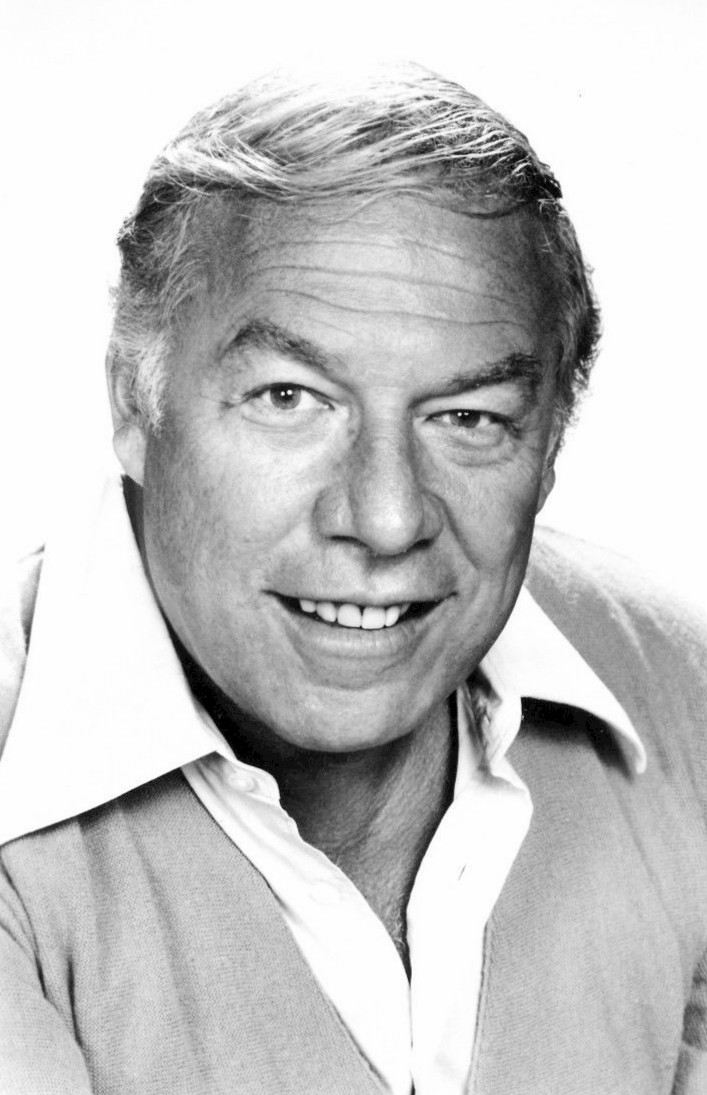
James Maitland Stewart (May 20, 1908 – July 2, 1997) was an American actor and military aviator. Known for his distinctive drawl and everyman screen persona, Stewart appeared in 80 films from 1935 to 1991. His films are considered… James Maitland Stewart (May 20, 1908 – July 2, 1997) was an American actor and military aviator. Known for his distinctive drawl and everyman screen persona, Stewart appeared in 80 films from 1935 to 1991. His films are considered among the greatest of all time. In 1999, the American Film Institute (AFI) ranked him third on its list of the greatest American male actors; he received numerous honors including the AFI Life Achievement Award in 1980, the Kennedy Center Honor in 1983, as well as the Academy Honorary Award and Presidential Medal of Freedom, both in 1985.
Born and raised in Indiana, Pennsylvania, Stewart started acting while at Princeton University. After graduating, he began a career as a stage actor, making his Broadway debut in the play Carry Nation (1932). He landed his first supporting role in The Murder Man (1935) and had his breakthrough in Frank Capra's ensemble comedy You Can't Take It with You (1938). He later starred in Capra's political comedy Mr. Smith Goes to Washington (1939), and Ernst Lubitsch's romantic comedy The Shop Around the Corner (1940), Stewart went on to receive the Academy Award for Best Actor for his performance in the George Cukor romantic comedy The Philadelphia Story (1940). After returning home from World War II, he went on to star in Capra's It's a Wonderful Life (1946), which was a critical and commercial disappointment upon its release, but has since become a beloved classic after its copyright expired in the early 1970s.
Stewart went on to star in four films directed by Alfred Hitchcock, Rope (1948), Rear Window (1954), The Man Who Knew Too Much (1956), and Vertigo (1958), as well as Anatomy of a Murder (1959), and The Man Who Shot Liberty Valance (1962).
With his private pilot's skills, he enlisted in the US Army Air Forces during the war, seeking combat duty and rose to be deputy commanding officer of the 2nd Bombardment Wing and commanding the 703d Bombardment Squadron from 1941 to 1947. He later transferred to the Air Force Reserve, and held various command positions until his retirement in 1968 as a brigadier general.
We believe privacy is a right, not a trade-off. Choose exactly what you're comfortable with. You can change these any time. Full privacy policy.
Essential
Always on
Required for the site to function
Session management, security tokens, login state, and your cookie preference itself. These cannot be turned off. No personal data is shared with third parties.
Analytics
Optional
Helps us understand what content you enjoy
We use anonymised analytics (e.g. Google Analytics) to see which articles perform well, how long people spend reading, and where traffic comes from. This helps us write better content. Your IP address is anonymised and no data is sold.
Personalisation
Optional
Remembers your preferences across visits
Remembers your reading preferences and recently read articles so we can surface relevant content. All data stays in your browser — nothing is sent to our servers.
Advertising
Optional
Used to show relevant ads that support the site
Allows advertising partners to show you ads based on your interests. If you decline, you'll still see ads but they won't be tailored to you. We work with Google AdSense and similar networks. You can opt out globally at youronlinechoices.eu.
Continue reading
You're clearly a fan
Get the best stories in your inbox
Join thousands of readers who get XOTLIST delivered daily. No spam, ever. Unsubscribe anytime.




 Mercersburg AcademyAlma materuntil 1997