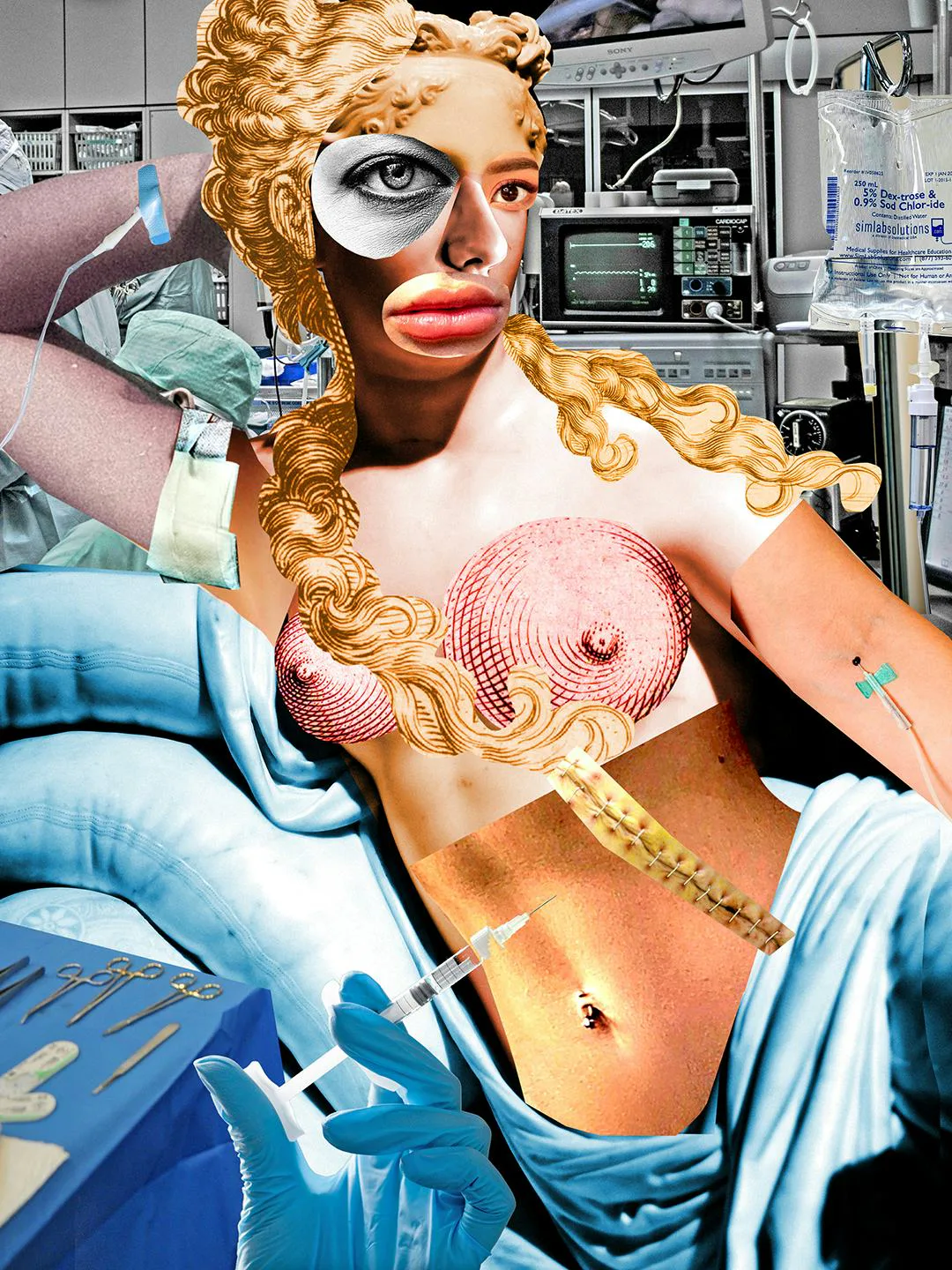
Why Plastic Surgeons Say Patients Have Moved On From “Instagram Face”
A rise in short-form video, retouching apps, and celebrities dissolving their own filler has caused a shift.
Like seasonal fashion trends, aesthetic ideals in beauty are constantly evolving. Take, for example, the hyper-sculpted cheekbones, overly lifted brows, and pumped-up lips of the the 2010s—a countenance known as “Instagram Face” that was shaped by the filters and injectables of the day. Now, that look is giving way to something softer and far more individual. According to New York City-based plastic surgeon Dr. Steven Pearlman, patients are distancing themselves from “contoured features and lips that looked inflated rather than defined,” he says. Instead, they’re favoring a subtle tweak or refinement that highlights what they’ve already got. Below, plastic surgeons break down what’s driving the shift, the procedures gaining momentum, and why the new luxury in aesthetics is looking like yourself, only better.
While patients once arrived with photos of celebrities or influencers as their inspiration, Dr. Pearlman says many now bring in edited images of themselves created with beauty apps. “I rarely hear requests for the specific features that defined the Instagram Face at its peak,” he explains. “The benchmark for a successful result has changed from dramatic transformation to undetectability.”
What’s behind the variance? Several cultural forces are at play, but one of the biggest is the growing number of celebrities openly discussing how they’re dissolving their own filler, and embracing a more lifelike aesthetic. “That gave patients ‘cultural permission’ to want less,” says Dr. Michelle Lee, board-certified plastic surgeon and founder of PERK Plastic Surgery. “It also raised patient awareness regarding overfilling and migration.”
One of the biggest shifts Dr. Pearlman has seen in his practice is the rise of short-form video. “Video is unforgiving in a completely different way than photography,” he says. “While a still photo captures one moment, video captures movement, expression, and the way a face changes while talking and laughing. Procedures or filler placements that looked beautiful in a photo can look stiff or mask-like on video, and as such, patients are now coming in specifically asking for results that hold up in motion, not just in a selfie.”
Filler is still one of the most popular cosmetic treatments. But today’s method is far more restrained than it was even a few years ago. “During peak Instagram Face, filler was often placed aggressively in the cheeks, lips, and jawline to create dramatic structural definition,” says Dr. Pearlman. “Now, I am thinking about micro-adjustments: small amounts placed precisely to restore what has been lost rather than to add what was never there.” Dr. Lee has noticed the same thing in her own work; she no longer has to convince patients to avoid overfilling. They’re already stepping into her office with that philosophy in mind.
There’s also a new priority in plastic surgery: facial balance, and considering how the entire face changes over time. “Aging is architectural, not a feature-by-feature problem,” says Dr. Lee. “When you treat the face as a whole system—addressing changes like loosening ligaments and moving fat pads—the results look much more natural."
Dr. Pearlman echoes that philosophy, noting that Instagram Face often emphasized individual features at the expense of harmony. “That era produced a lot of faces where individual features had been maximized in isolation, but the overall result looked unbalanced or unnatural,” he says.
A hallmark of today’s aesthetic approach is stimulating the skin’s own collagen, which aligns with what patients are increasingly requesting. Treatments like Sculptra, Radiesse, and energy-based devices such as Morpheus8 and Sofwave all contribute to this, says Dr. Pearlman. “When these treatments are performed, the results look like the patient’s own skin and face improving.”
For Dr. Lee, too, treatments that harness the skin’s own regenerative capacity are leading the way. She points to procedures like microneedling and BroadBand Light (BBL) therapy, which stimulate the skin’s natural repair processes to improve tone, texture, and overall skin quality with time. Fat transfer is another common request. Despite being significantly more expensive ($10,000 versus $1,200) and more involved (requiring surgery and recovery), patients are still choosing it for its regenerative effects and realistic appearance, says Dr. Lee. “It is the ‘quiet luxury’ of aesthetics,” she adds.
Dr. Pearlman notes that the overall conversation is moving toward restoration and preservation. “We want patients to look refreshed and healthy, not different,” he explains. “We’re not trying to create an entirely new face.”