One of the World’s Best Menswear Stores Is In… Texas?
Namu is one of America’s most interesting retailers, offering a tightly curated mix of Japanese and European labels.
Around 10 years ago, Jessie Lee and her partner James Kang had a novel idea: A store built around what they call “elevated day-to-day pieces.” The concept was shaped while reading the Japanese fashion bible Popeye and W. David Marx’s Ametora, and by the realization that none of the labels they were into — Fujito, Hatski, ts(s) — were available in the US. “At the time, the Japanese craze was about denim and workwear, not the oversized everyday clothes made from luxurious natural fabrics that we liked,” Lee says.
Namu Shop, the boutique they conceived, would go on to become one of America’s most interesting retailers, offering a tightly curated mix of Japanese and European labels. It would be among the first to introduce these labels outside their home countries and the clothes, they imagined, would all be styled with an emphasis on the texture, weight and feel of fabric.
But, before Namu was born, the duo faced a couple of challenges. Neither of them had a background in fashion. Both were working full-time as consultants. And, still in their early twenties, they were living in Houston, Texas, not exactly a fashion capital.
Still, the couple pushed ahead. They made “business cards, a pitch deck and a dream roster of brands,” and traveled to New York, visiting trade shows and showrooms. There, they were met with skepticism. “Not to sound funny,” Kang says, “but, quite literally, we looked very young and some people were like, ‘Who are these kids’?” (Truth be told, even now, with a newborn just a couple of weeks old, they still look surprisingly fresh.) Besides, they had already decided that their store would not be brick and mortar. “After that first shock,” Kang continues, “people were surprised to hear we didn’t have a retail lease and would be running it online-only from Texas.”
However, two labels — Document and Kaptain Sunshine, both similarly young at the time — decided to give Lee and Kang a chance. “With Jongsoo Lee, founder and designer of Document, we had a kinship from the start,” Lee says, “also because he’s Korean-American like us. His English is pretty good, but I tried my best to speak to him in Korean.” Lee and Kang further earned their new partners’ trust with what they call their “fan-first mentality” as buyers. “With Document, we knew the story, we knew the lineup, and we had been wearing its relaxed sculptural clothes for years. We were young, sure, but knowledgeable too,” Lee says.
Document’s Jongsoo Lee was impressed by them, as well as by their choice of a Korean name for the shop (Namu means “tree”) and their intention to stock Korean labels. He uses the word “jinguk” when speaking of Lee and Kang. “The word literally refers to a soup that has been boiled for a very long time until the flavor becomes deep and rich,” he explains. “In Korea, we use jinguk for someone who is genuine and has depth — the kind of person whose value is revealed over time.”
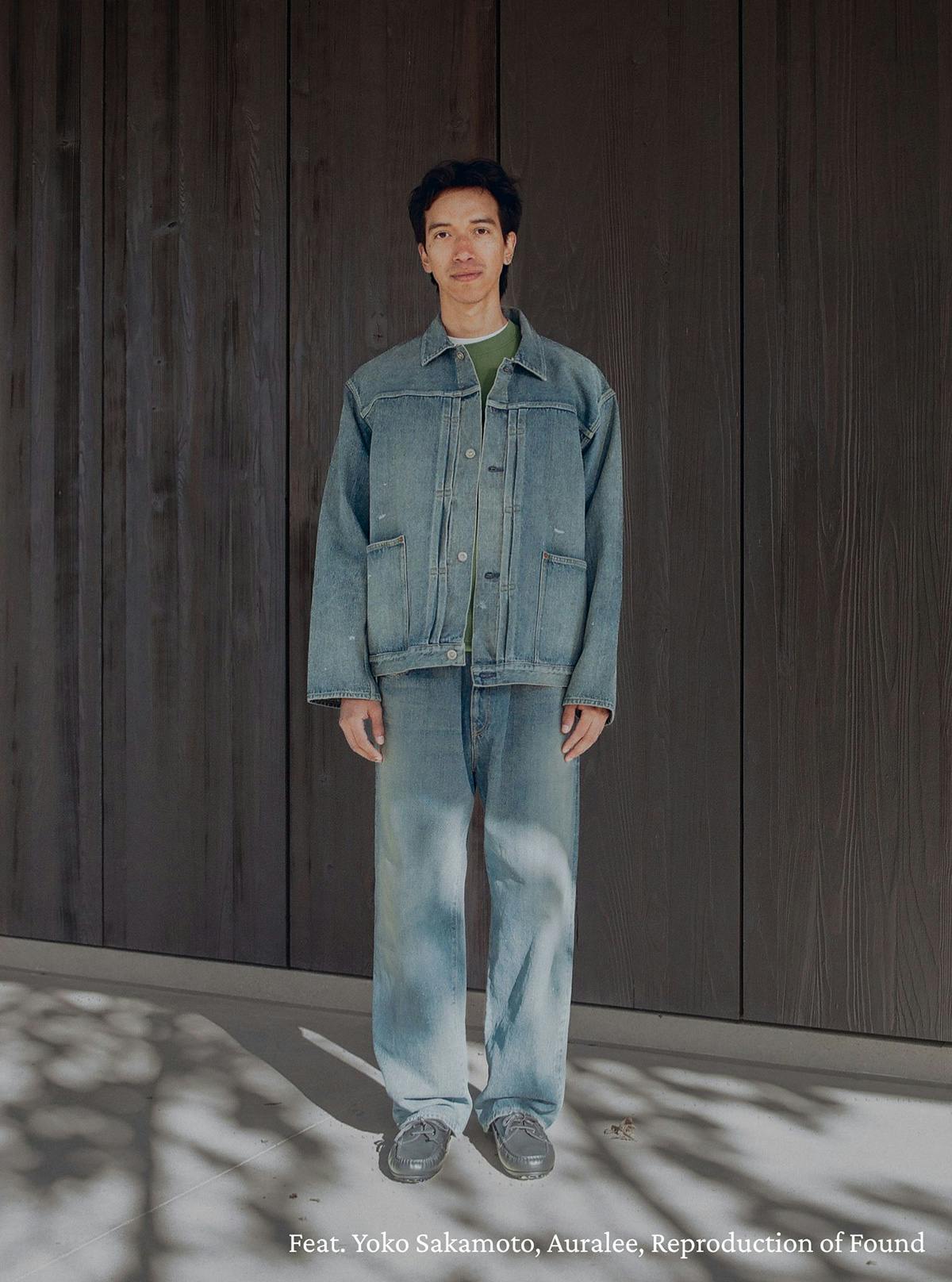
With two labels on board, Lee and Kang started building Namu in Houston with a small team. Lee, who had picked up some retail experience at the now-defunct boutique Myth & Symbol – “they were pioneers, maybe even a bit too early, carrying names like Black Crane and Rachel Comey back in 2012” — has been involved in nearly every aspect of the business from the start, including the clean styling of Namu’s product imagery. All shot against the same grey-white wall, the images don’t show faces, placing the focus squarely on the outfits and the garments themselves.
Before a growing number of independent boutiques began to deliberately ignore the internet, Lee and Kang were already comfortable operating online-only. Asked whether they ever miss the face-to-face interaction of a brick-and-mortar store, Lee says she enjoys the “longstanding relationships with customers over email. Some span several years and there are threads I still remember fondly, especially of people discovering new brands through us.” Kang points to other benefits. “We really want our customers to be discerning buyers. The combination of detailed product imagery and different styling options allows them to consider the clothes in a pressure-free environment.”
Namu’s strongest point is its roster of top-tier labels. It often brings them to the US very early — Japanese names like Amiacalva, Ciota and Ylève and, more recently, European labels such as Cecilie Telle, Eleph and Studio de Lostanges. It’s what makes Namu something of a cult address among menswear insiders. Rhys Kearns, ex-fashion industry professional and now creative director at Røros Tweed, is one of them. “Namu has been my favorite store for many years,” he says, “and I prefer to gatekeep it at all costs.” (Sorry, Rhys.) “Today, the ‘good’ stores often carry the same ‘good’ brands, but Namu is different,” he adds. “They have some deep cuts which are equally good but aren’t in the spotlight as much.”
Looking at the 35 labels Namu stocks, there’s a strong, consistent vision that ties them together — as if Lee and Kang are curating a well-considered wardrobe. “Our focus is on luxurious casual clothes that are highly wearable,” Lee says. When gently pushed to elaborate, she adds: “To me, wearability is about a muted sense of luxury — it’s subtle and understated, but with depth. I’m interested in clothes you keep reaching for again and again, yet they still feel special each time.” Kang takes the idea a step further: “There’s a two-sidedness to these clothes. The aesthetic is non-maximalist, but they’re made with a maximum amount of dedication to pushing the boundaries of fabric and finishing.”
As Kang gets up to rock the baby, gently pacing the room, Lee reflects on Namu’s 10-year anniversary next year and what lies ahead. One thing is certain: Namu will remain online-only from Houston. “This city is home for us. It’s not Tokyo or New York, but that’s what we like about it — just being surrounded by regular people like ourselves. It gives us a steady place to think about what we like, on our own terms.”