How Did This Mysterious Shoe Brand Come To Define Good Footwear?
Reproduction of Found is the shoe brand quietly behind much of menswear's good-footwear obsession, founder Masato Ueda explains in interview.
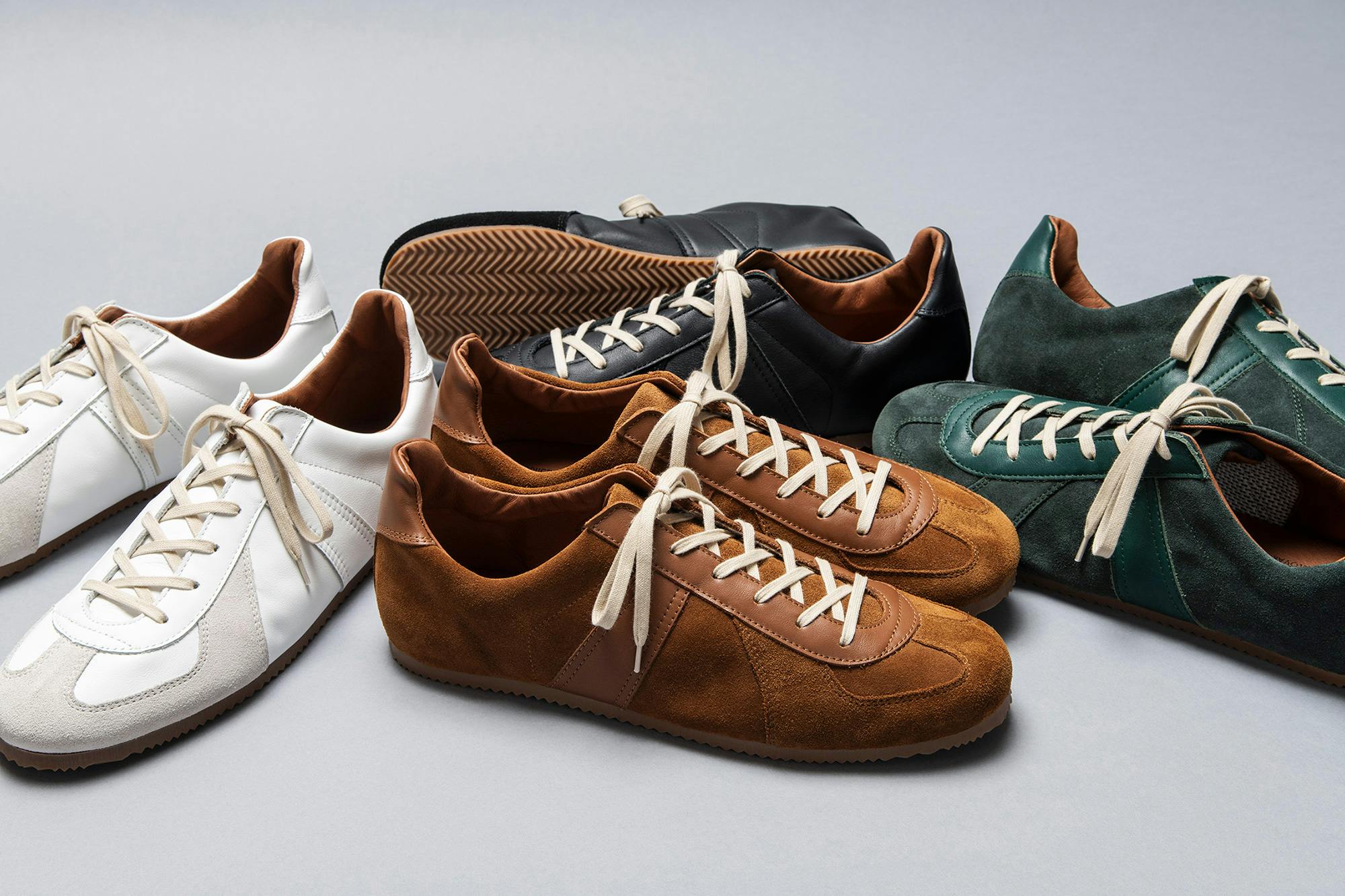
Fashion is incredibly opaque, whether in how products are sold or where and even how they get made. Not Reproduction of Found. The Tokyo-based label does exactly what its name suggests: reproducing vintage military shoes and trainers at European factories that used to produce this footwear in the 1950s up to the 1990s. There’s no flashy website, little PR and authorship is muted — all to let the shoes speak for themselves.
And it works. Since the label’s launch in 2016, its German Army Trainers and roughly 30 other models have spread worldwide, stocked by old and new tastemakers alike, from Kafka Mercantile and BEAMS International to C’H’C’M’ and Namu Shop. They’re also available at Sunnysiders stores in London and Tokyo — part of its parent company Eye Found Co. Ltd. — alongside Japanese names such as Big John, Fujito and Yonetomi.
Despite the low profile, Reproduction of Found seems to be everywhere in menswear right now, if you know where to look. Although, it’s not difficult to understand why. Besides the price, which starts at just $70, its footwear is informal enough to go with almost everything yet refined enough to feel luxurious. That’s what Sigurd Bank, founder and designer of mfpen, likes about it too. His label collaborated with Reproduction of Found this season on a GAT in deep burgundy. “It’s a trainer, of course, but the execution — slim rubber sole, Horween leather, crafted in Slovakia — makes it complement suiting without too much juxtaposition,” he says.
Danish slow-burner mfpen is far from the only buzzy label to embrace Reproduction of Found in its collections. The prep-gods at Drake’s have maintained an ongoing partnership since 2016, issuing GATs and British military plimsolls. Other collaborators include the minimalist masters Kaptain Sunshine and Lady White Co., which both offer their take on the original GAT, with its iconic “T-toe” and gum sole.
Los Angeles-based Lady White Co., known for its sleek sportswear silhouettes, recently created a version with pebbled leather uppers and a thinner, ripple-like sole. For Spring/Summer 2026, Shinsuke Kojima of Kaptain Sunshine stripped the already pared-back shoe even further, introducing a cowhide leather version in monochrome black and white.
Despite its impressive list of collaborators and stockists — around 150 in total — Reproduction of Found is a very small operation. It is run by three friends, with designer Masato Ueda taking on the sole creative role. “Maybe it’s time to hire more people, but at the moment I’m still doing all the sourcing and designing myself,” says Ueda, who is soft-spoken and rarely gives interviews.
Before launching Reproduction of Found, Ueda worked as brand director at the legendary but now-defunct Tokyo store n°44. From 1997 to 2009, while still in his twenties, he oversaw its mix of European vintage garments and designer clothing, including pieces he designed himself. In this role, he frequently traveled to Europe to visit warehouses specializing in militaria, where he was struck by what he calls the “functional beauty” of mid-century designs.
At a time when this aesthetic had yet to fully reach Japan, he also began collecting vintage military shoes and trainers, unknowingly laying the groundwork for Reproduction of Found. Though a collector, he’s not precious about them: he dissects pairs, turning them inside out and cutting them apart to understand their construction. “I always have to make sure I have more than one pair, so I don’t destroy the reference,” Ueda says with a chuckle.
From the start, the label’s shoes have been produced in three factories in Slovenia, Romania and Italy. Ueda was first introduced to them through an Italian friend. Today, ten years on, he still visits the factories twice a year, making the 24-hour journey from Tokyo to meet workers and check quality.
For Ueda, the challenge of reproducing vintage shoes in a contemporary way runs deeper than sturdy construction and high-end leather. Ultimately, it lies in navigating the paradox of “reproduction.” “You want to improve the shoe without losing its spirit,” he says, “even if perfecting the idea behind it sometimes means drifting away from the original.”